DESIGN
Multicard Holder Design
Card holders in general must be durable and efficient. This card holder was designed to improve upon the durability and appeal of existing card holders. This project was prototyped multiple times before it’s final iteration.
Duration
September - December 2015
Project Type
Reverse Engineering
Contributors
Derek Madrid, Madelyn Krasnay
Techniques
Reverse Engineering
Computer Aided Design
3D Printing
Product Design
Augmented Reality
Technologies
PTC Creo
Autodesk AutoCAD
Adobe Dimension
Key Takeaways
01. Manufacturing Material
Polycarbonate plastic, metal, carbon fibre or a hybrid of these materials can be used to make the card holder depending on the cost factor. These materials were chosen for their strength and durability. Polycarbonate is known for its property of being lightweight yet durable and cheaper. Metal can be used to provide extra durability and strength while carbon fibre will provide extreme lightness and strength along with a good looking design.
02. Manufacturing Process
The manufacturing process depends on the type of the material chosen. In the case of polycarbonate, injection moulding can be used. It provides cheaper but lower quality alternative to metal or carbon fibre. Metal would be shaped using production processes such as stamping (metalworking). This could also be mass produced rather cheaply with a fairly high quality of product. Carbon Fibre model can be produced using processes such as compression moulding. Use of such material allows for a high quality product with high durability but with a high cost.
03. Failure Mode
The hinge part of the card holder undergoes more stress than the other parts of the card holder and thus maybe prone to snapping. The fix for this problem would be to reinforce the model with metal strips or can be manufactured with a different more durable material such as carbon fibre. In 3D printed model, heat-shrinkage-the shrinkage of plastic under high temperatures, resulted in cards not being able to fit comfortably in the holder. This will not be a problem in the final design due to a different manufacturing process.
04. Benefits of Redesign
Cards will last longer as they are not required to be bent while being placed in and removed from. Use of less material resulting in cheaper mass production.
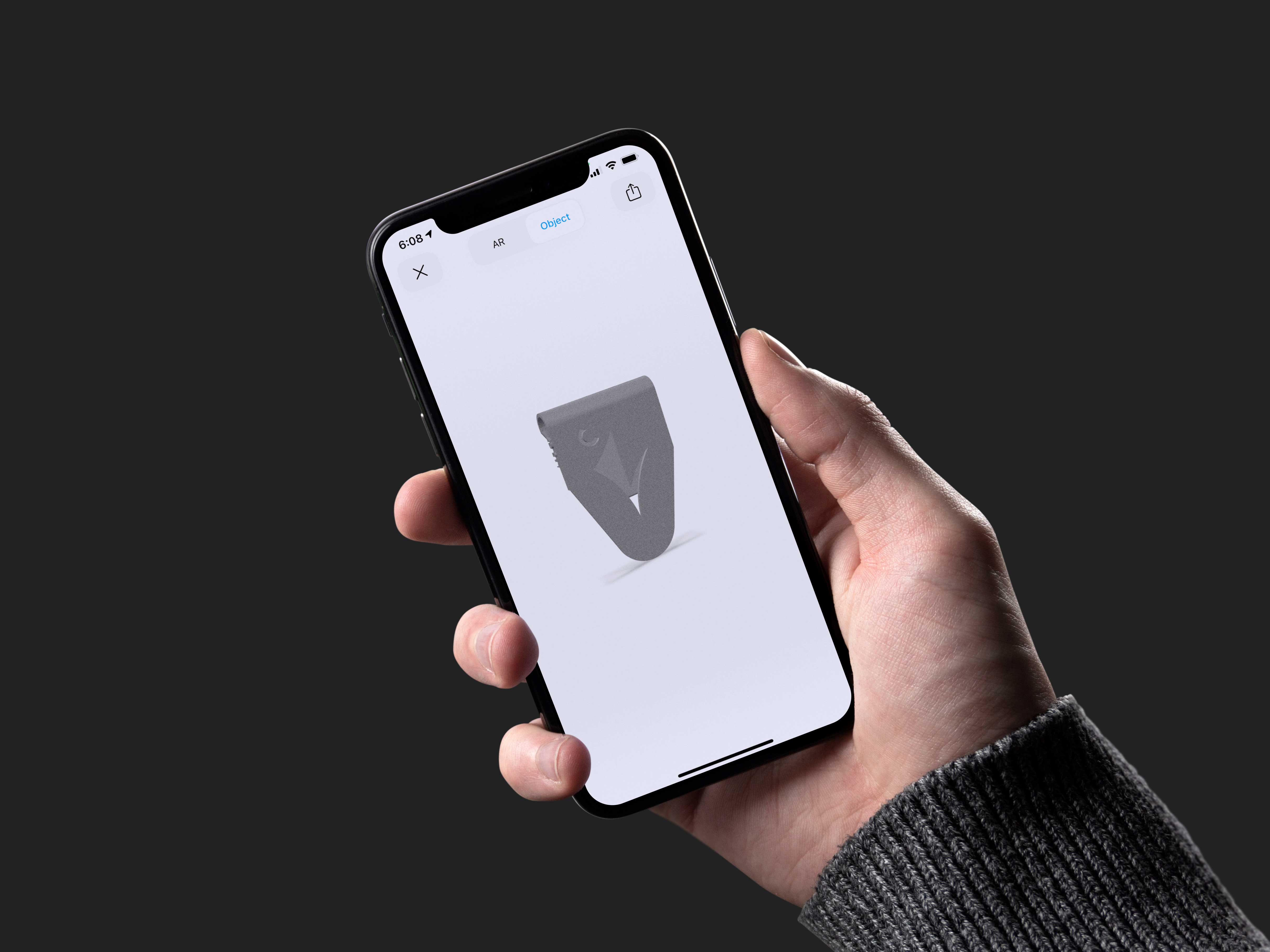
Experience it with Augmented Reality
To view the Multicard Holder in your environment using Augemented Reality, visit this page using Safari on iOS/iPadOS devices.